GERD Treatment in Mumbai

Understanding GERD Treatment

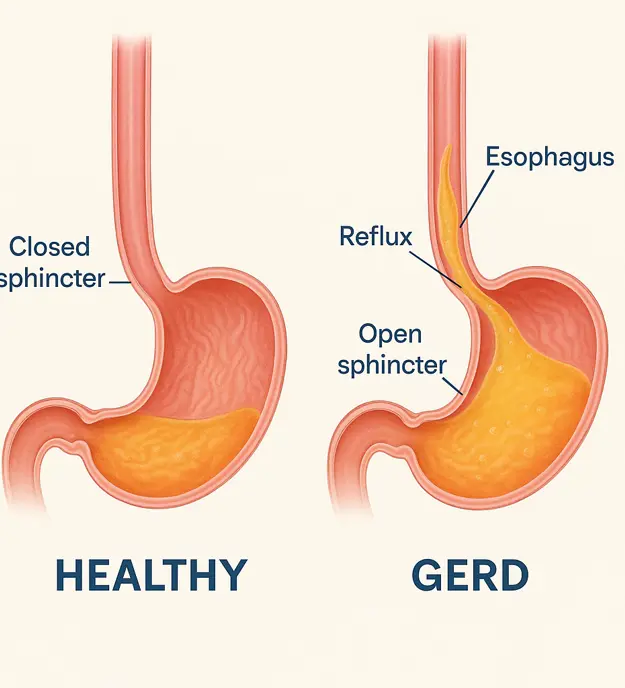
Gastroesophageal Reflux Disease (GERD) occurs when the valve between the stomach and the food pipe (oesophagus) weakens, allowing acidic stomach contents to flow backwards. This repeated acid exposure irritates and inflames the oesophagus, causing heartburn and other troublesome symptoms.


Occasional reflux is common, but frequent, persistent reflux can damage the oesophagus over time and reduce quality of life. When lifestyle changes and medication are not enough, surgery can restore the natural anti-reflux barrier. At Megha Surgical Hospital we offer a complete, stepwise approach to managing GERD.
Common Causes

Signs & Symptoms

How We Diagnose It

Our Treatment & Procedure

Recovery & Aftercare

Frequently Asked Questions

When should GERD be treated with surgery?
Surgery is considered when symptoms persist despite medication, when patients wish to stop lifelong medicines, or when complications such as a large hiatal hernia develop.
 
For most patients it provides long-lasting relief, significantly reducing or eliminating the need for daily acid-reducing medicines.
 
Long-standing acid damage can lead to narrowing of the oesophagus or changes in its lining, so persistent GERD should always be evaluated.
 
Yes, avoiding trigger foods, eating smaller meals and not lying down right after eating all help control reflux.
 
Yes, fundoplication is typically performed laparoscopically, meaning small incisions and a quicker recovery.